
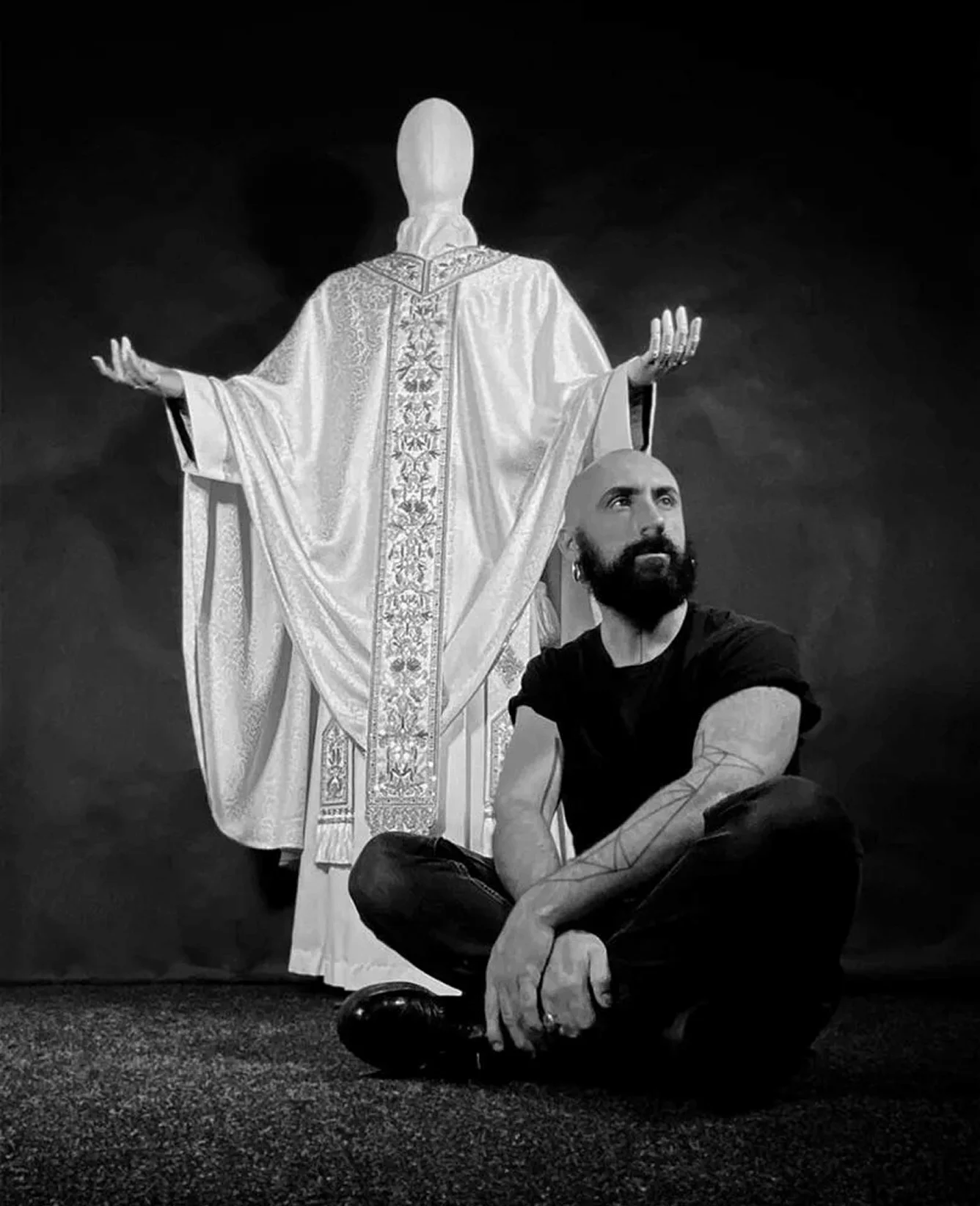
Filippo Sorcinelli is the visionary behind the Vatican’s liturgical vestments. Founder of Atelier LAVS in 2001, he has created garments for Pope Benedict XVI and designed the robe for Pope Francis’s inaugural. Mass in 2013. Hiswork fuses ecclesiastical ritual with couture codes, weaving textured fabrics, symbolic motifs, and precise tailoring into garments that resonate beyond the altar. By reimagining sacred attire through an artistic lens, this innovator positions himself at the intersection of devotion and fashion, proving that even tradition can be daringly chic.
The Italian creative grew up in the Marche region, where music and tradition were deeply ingrained in daily life. First celebrated as an organist, he carried a fascination for sacred sound before turning to textiles. That dual passion became the foundation for Atelier LAVS (Laboratorio Arte Vesti Sacre), a workshop devoted to sacred garments. What began as a niche project soon drew attention for its craftsmanship and symbolism.
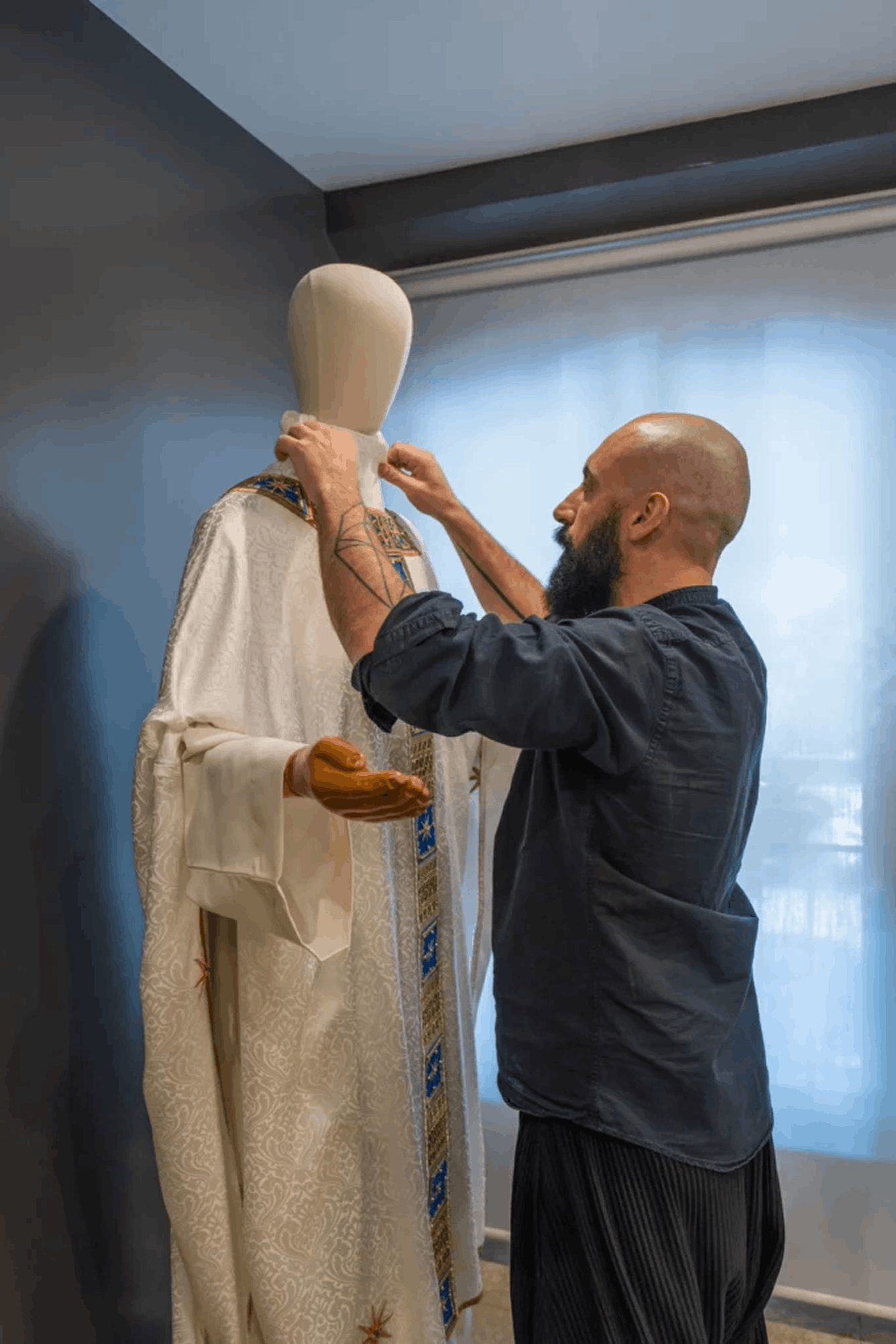
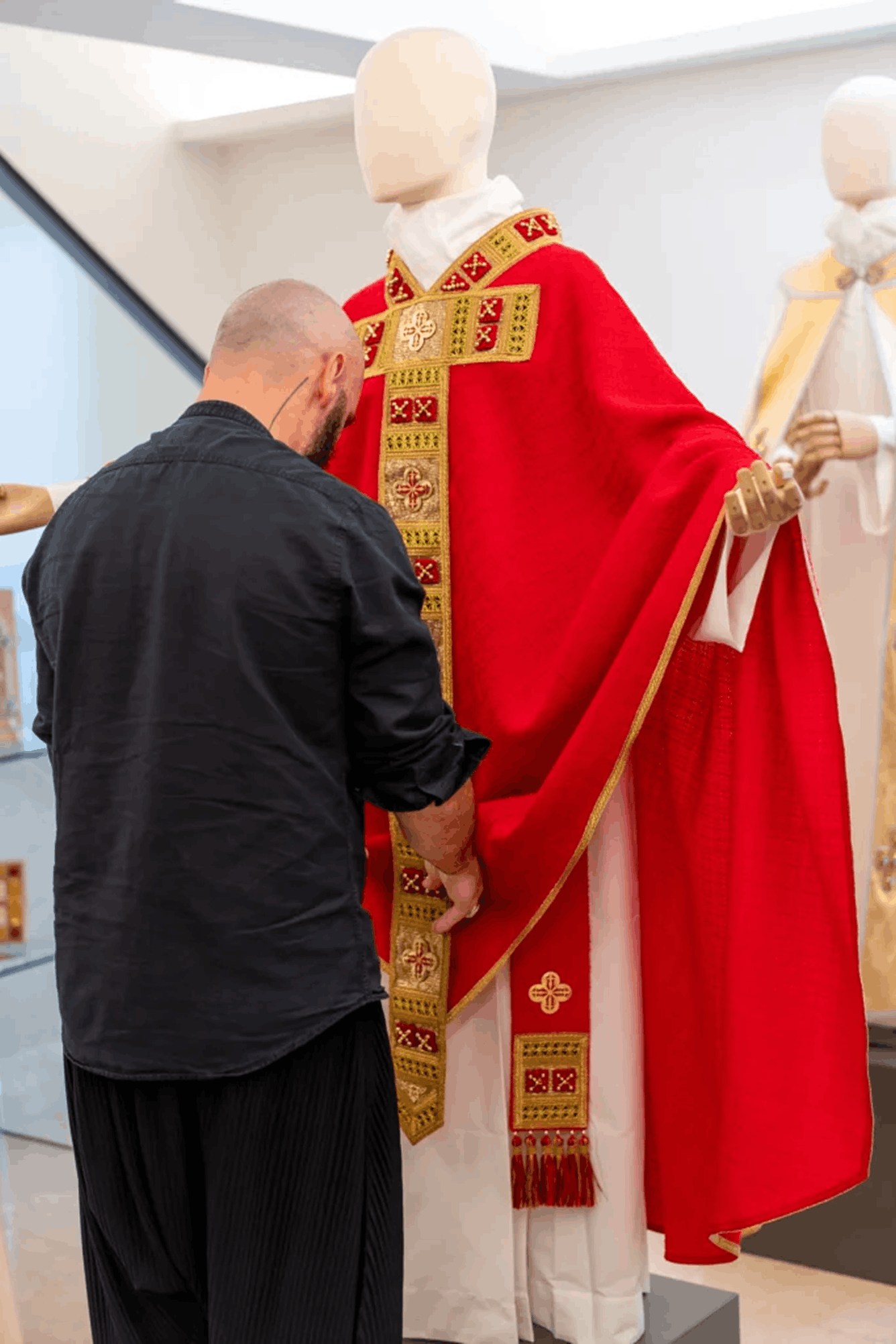
Unlike many who view religious attire as static, the couturier approaches vestments as living garments. Every chasuble, mitre or stole is created not only to honor tradition but also to pulse with artistry. Silks, brocades, metallic threads and geometric motifs come together with precision. A robe might shimmer under candlelight, not out of excess but from deliberate detail.
The most striking aspect of the atelier founder’s career is his dual role as insider and disruptor. He moves within the conservative world of the Catholic Church yet brings with him the lens of couture and artistry. Tattoos, avant-garde sensibility and dramatic self-presentation set him apart, but his garments transcend appearances.
He understands that both faith and fashion are agents of transformation. When a model steps onto the runway or when a priest enters the sanctuary, clothing signals a shift in presence. This craftsman captures that parallel, turning vestments into expressions of spirituality and style.
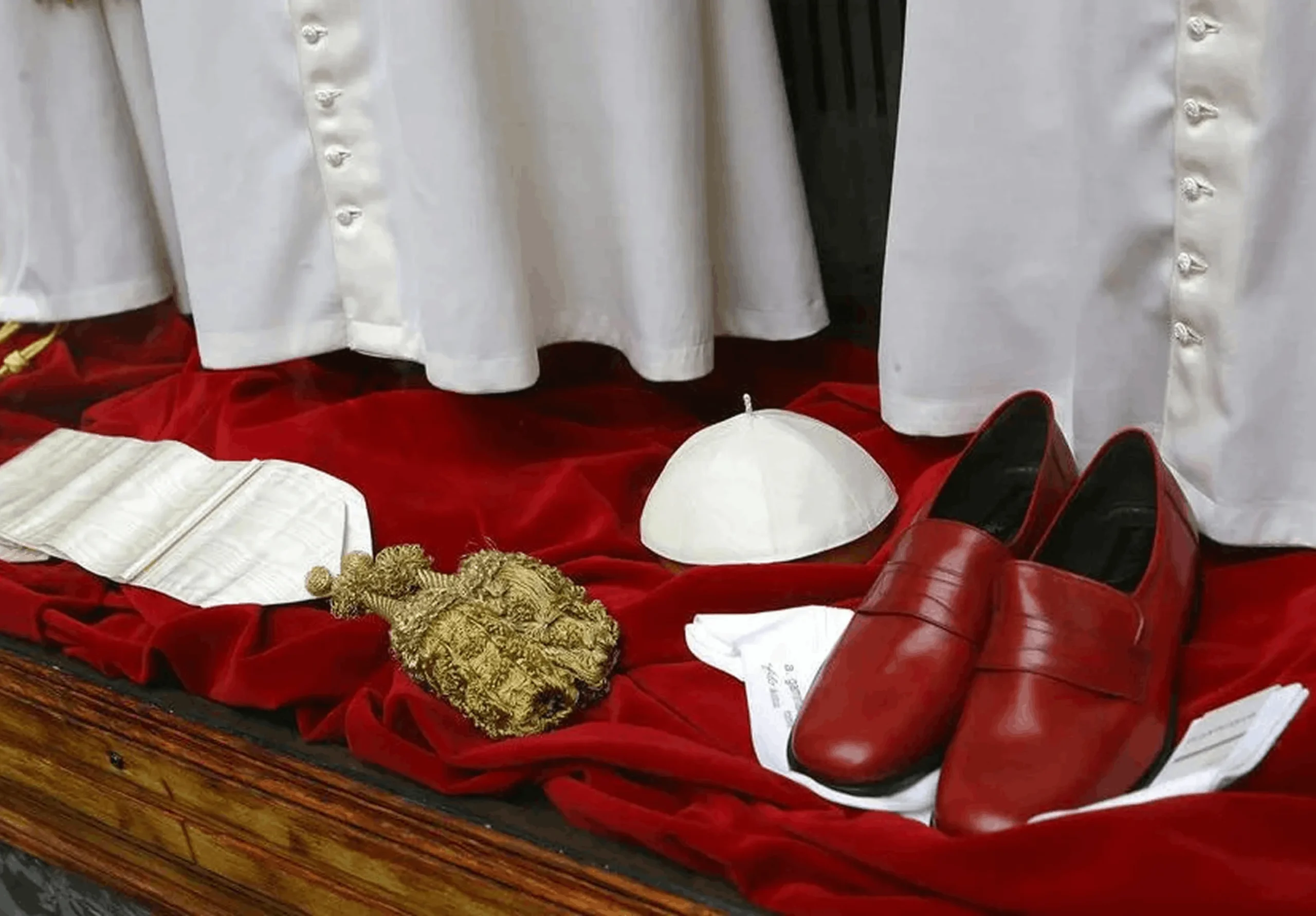
Unlike many who view religious attire as static, the couturier approaches vestments as living garments. Every chasuble, mitre or stole is created not only to honor tradition but also to pulse with artistry. Silks, brocades, metallic threads and geometric motifs come together with precision. A robe might shimmer under candlelight, not out of excess but from deliberate detail.
The most striking aspect of the atelier founder’s career is his dual role as insider and disruptor. He moves within the conservative world of the Catholic Church yet brings with him the lens of couture and artistry. Tattoos, avant-garde sensibility and dramatic self-presentation set him apart, but his garments transcend appearances.
He understands that both faith and fashion are agents of transformation. When a model steps onto the runway or when a priest enters the sanctuary, clothing signals a shift in presence. This craftsman captures that parallel, turning vestments into expressions of spirituality and style.
Be the first to receive exclusive shopping guides, top stories and more.
By signing up, you consent to receive Provence Catalogue newsletter and accept our privacy policy. You can unsubscribe at any time.