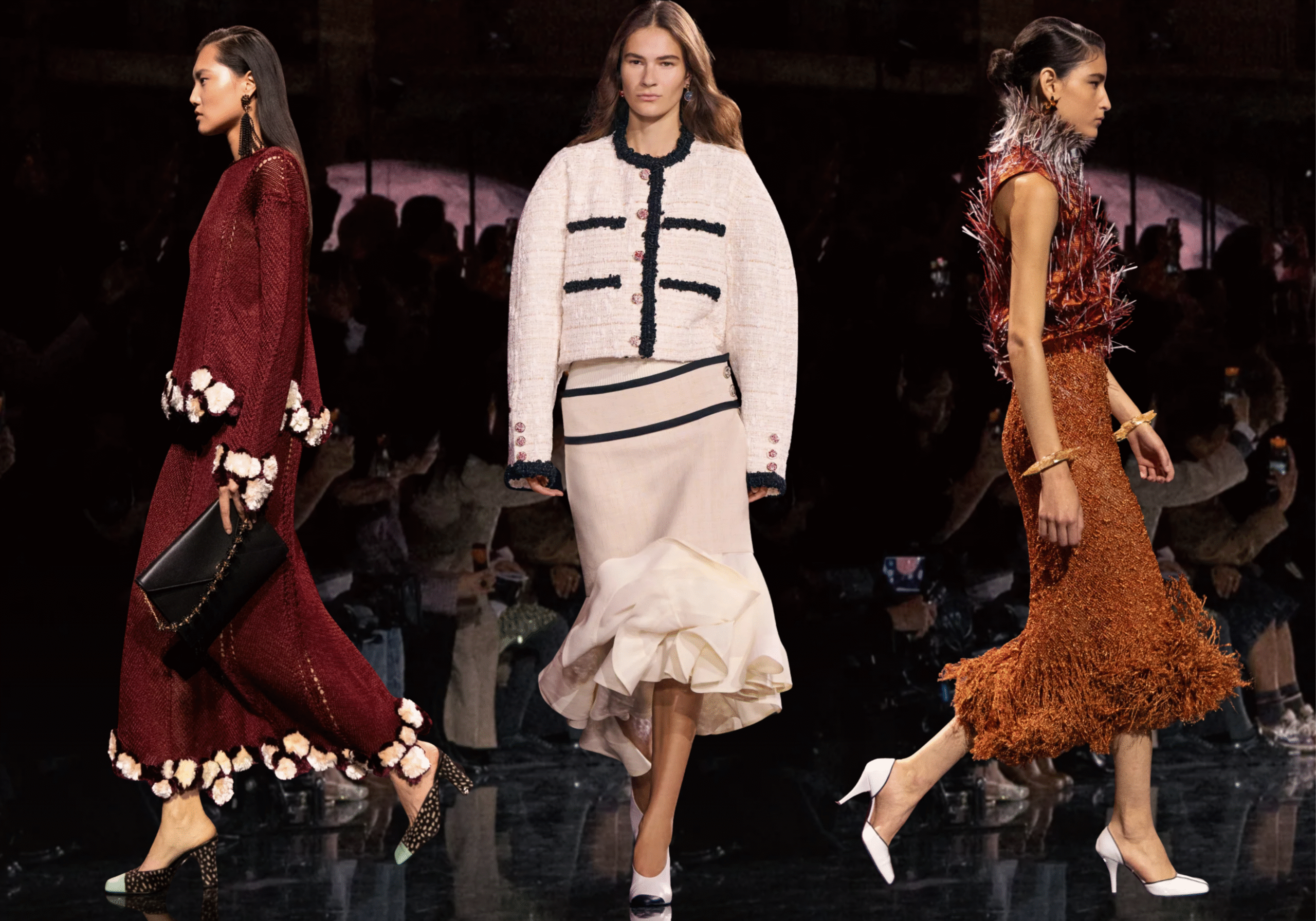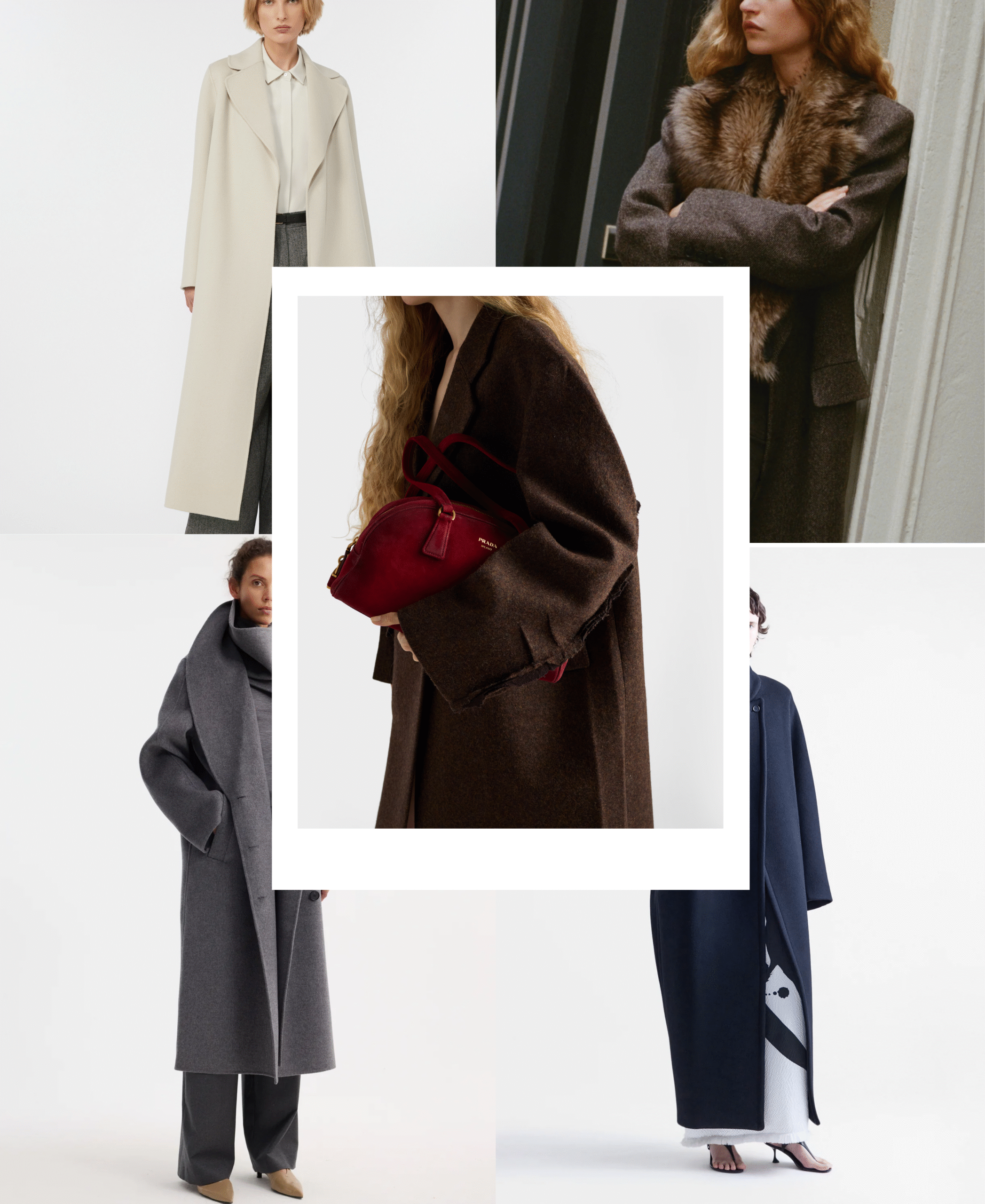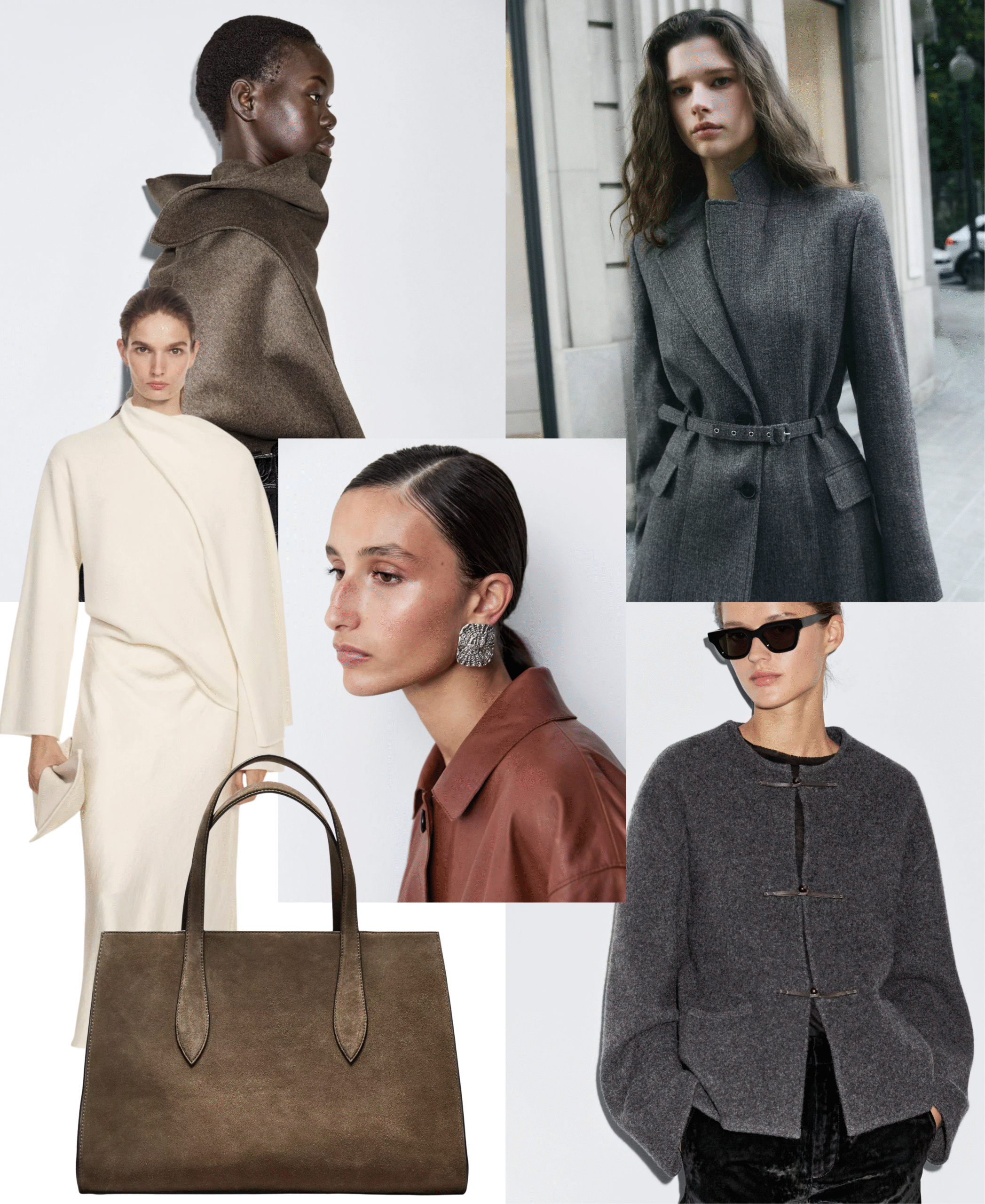

The fashion world has always oscillated between extremes: the pared-back restraint of minimalism and the unapologetic abundance of maximalism. In recent seasons, a new philosophy emerged that blends opulence with cultural depth. Coined by some as heritage maximalism, this aesthetic celebrates tradition, nostalgia, and historical detail, while layering richness and personal storytelling into clothing. From New York to Paris, heritage maximalism is redefining the way designers craft garments and how individuals express identity through dress. This Spring 2026 season, designers showcased their interpretations of heritage maximalism, each pulling from different archives and traditions.
01 | Christian Siriano: Old Hollywood with Technicolor Grandeur
Christian Siriano’s Spring/Summer 2026 runway was an ode to Old Hollywood. Drawing inspiration from Marlene Dietrich, he began with stark black-and-white gowns and tailored suits that evoked the glamour of classic cinema. Yet the show quickly evolved into a technicolor fantasy, introducing sculptural bubble-hem dresses, dramatic coats in silk and organza, and oversized top hats that blurred masculine and feminine lines.
02 | Sergio Hudson: Power, Craft, and African Heritage
If Siriano channeled Hollywood, Sergio Hudson’s designs drew strength from heritage rooted in craft and cultural identity. His 2026 collection introduced bold zebra and leopard prints, sequins that caught the light with every move, and chunky gold accessories that nodded to regality. Beyond the surface sparkle, Hudson’s embroidery carried profound weight, referencing African tribal scarification.
03 | Altuzarra: Surreal Vintage Glamour
Joseph Altuzarra leaned into vintage glamour while adding surreal twists that heightened the maximalist lens. His Spring 2026 show offered 1940s-inspired silhouettes, but with whimsical exaggerations. Drop hoop waistlines distorted proportions, faux-fur accents heightened drama, and 3D floral appliqués added a tactile, sculptural dimension.
Altuzarra’s maximalism was less about flamboyance and more about richness in detail. By reworking vintage codes with surreal flourishes, he created garments that felt like dreamscapes. His layering of textures and playful construction positioned this collection as not only a tribute to history but also an exploration of imagination.
04 | Rachel Scott of Diotima: Carnival Joy and Craft Heritage
Rachel Scott, the designer behind Diotima, offered one of the most compelling interpretations of heritage maximalism through her celebration of Caribbean craft. Her collection honored Carnival traditions, using crochet, paillettes, and vivid colorwork that resonated with radical joy. Each garment was imbued with a sense of cultural resistance and history, reminding audiences that fashion is a vessel for heritage as much as it is for beauty.
05 | Ralph Lauren: Americana and the Elegance of Legacy
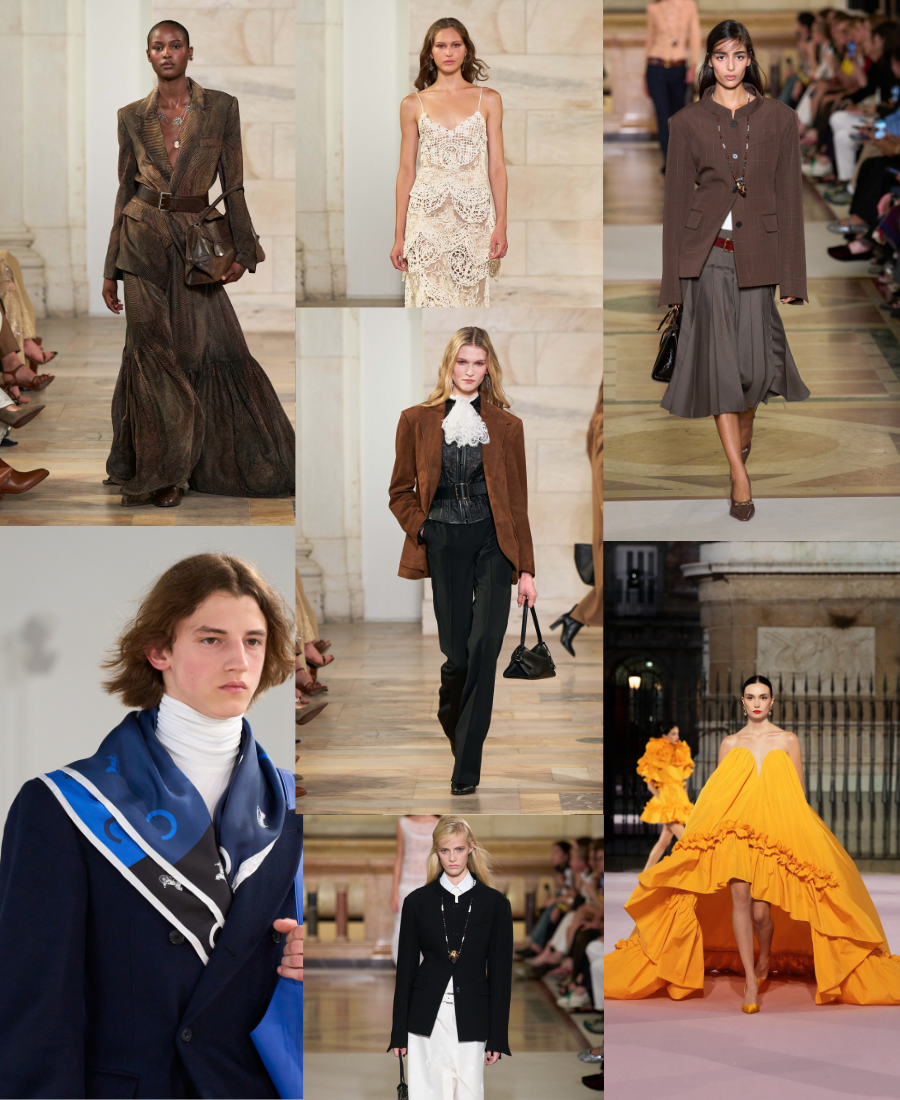
The King of Americana, Ralph Lauren approached his collection through the lens of his own storied archive. His Spring 2026 ready-to-wear collection drew on the heritage of American sportswear and menswear, offering tailored suits, flowing silhouettes, and a classic palette of black, white, and red. Wide-brimmed hats and crisp white shirts with bib fronts became central, embodying both refinement and timelessness.
Lauren’s version of heritage was rooted in restraint elevated by detail. By revisiting and amplifying his brand’s Americana codes, he reminded audiences of the power of legacy. His designs underscored that maximalism does not always have to shout; it can whisper through strong tailoring and carefully considered layering of classic forms.
06 | Tory Burch: Nostalgic Americana with Decorative Detail
Tory Burch’s collection was equally steeped in nostalgia, but her lens turned toward personal history. She revisited her father’s vintage jackets, incorporating embroidery, monogram motifs, and soft hues that spoke of intimacy and memory. Her designs fused classic Americana with decorative embellishment, striking a balance between heritage and wearability.
07 | Celine under Michael Rider: Nostalgic Codes and Decorative Flourishes
Michael Rider’s first collection for Celine, brought a little bit of equestrian nostalgia and country-preppy sensibilities into the maximalist fold. His Spring 2026 runway revived silk scarves, layered belts, and heavy jewelry, all steeped in decorative richness. By infusing house codes with maximalist nuance, Rider positioned Celine at the intersection of tradition and modern playfulness.
08 | Proenza Schouler: Heritage through Process and Texture
At Proenza Schouler, heritage maximalism was expressed through rawness and exposure. The theme of “soft undoing” was realized through visible seams, exposed garment interiors, frayed fabrics, and reverse jacquards. These elements elevated craft and process, positioning heritage not only as design inspiration but as material evidence.
Rather than decorating garments with overt embellishment, Proenza Schouler celebrated the maximalist richness of texture and construction. By showing the work itself—unfinished hems, inside-out details—the designers reframed memory and legacy as intrinsic to the garment’s DNA.
09 | Carolina Herrera: Theatrical Spanish Elegance
Carolina Herrera’s Spring 2026 runway in Madrid embodied theatrical maximalism in its purest form. Vivid floral motifs, ruffles cascading in layers, bold polka dots, and saturated purples dominated the collection. Her vision was expressive and unapologetically grand, a departure from restraint in favor of spectacle.
These collections show the evolution of how fashion interprets culture and history. From Christian Siriano’s cinematic opulence to Carolina Herrera’s theatrical Spanish flourishes, designers are proving that maximalism embraces ornament and opulence as vessels of memory and individuality.