Back
Add to My Favorites

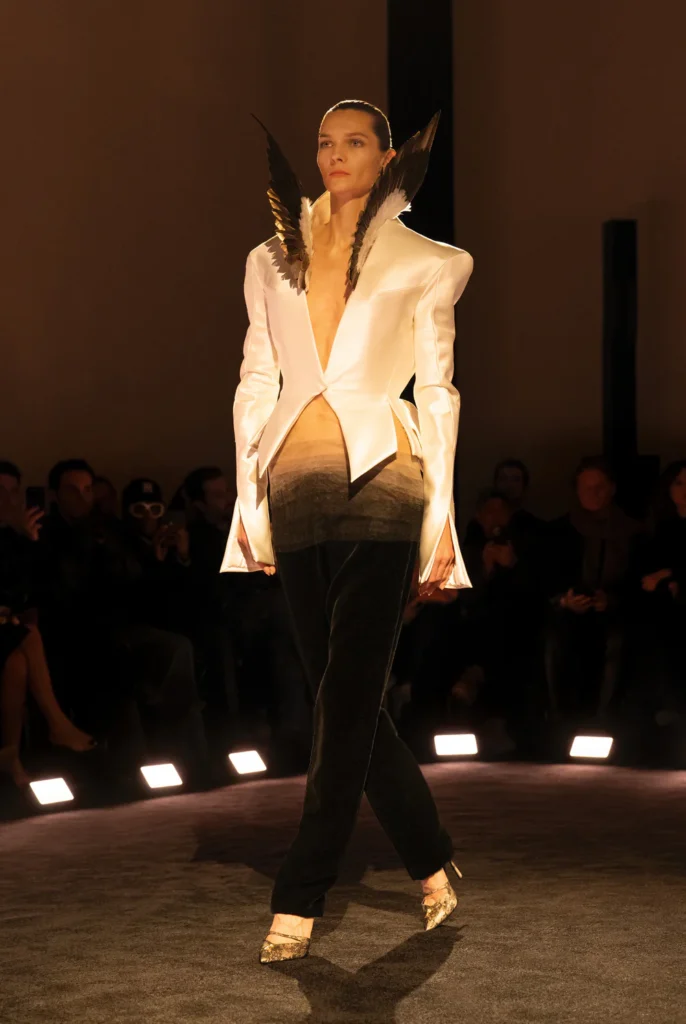
Photo: Schiaparelli Spring Summer 2026 Haute Couture. Maison Schiaparelli
Add to My Favorites
- Culture
/
Schiaparelli: The History, Iconic Designs & Daniel Roseberry’s Modern Revival
Photo: Schiaparelli Spring Summer 2026 Haute Couture. Maison Schiaparelli
The House of Schiaparelli has always embraced creative rebellion. From Elsa Schiaparelli’s provocations to Daniel Roseberry’s current experiments, Schiaparelli treats fashion like a laboratory. Decorum is often optional—making each design more intriguing and influential.
The story of the iconic maison begins with Elsa Luisa Maria Schiaparelli, the second daughter of Neapolitan aristocrat Giuseppa Maria de Dominicis and Celestino Schiaparelli, a scholar from Piedmont, who was born in 1890 in Rome.
She didn’t come up through the usual channels of a fashion designer. She skipped the formal training, but brought a sharp, conceptual mind to the table. While others saw dressmaking as a craft, Schiaparelli treated it as an idea. This shift from tradition to innovation explains why her early designs, especially the trompe-l’oeil, stood out right away.
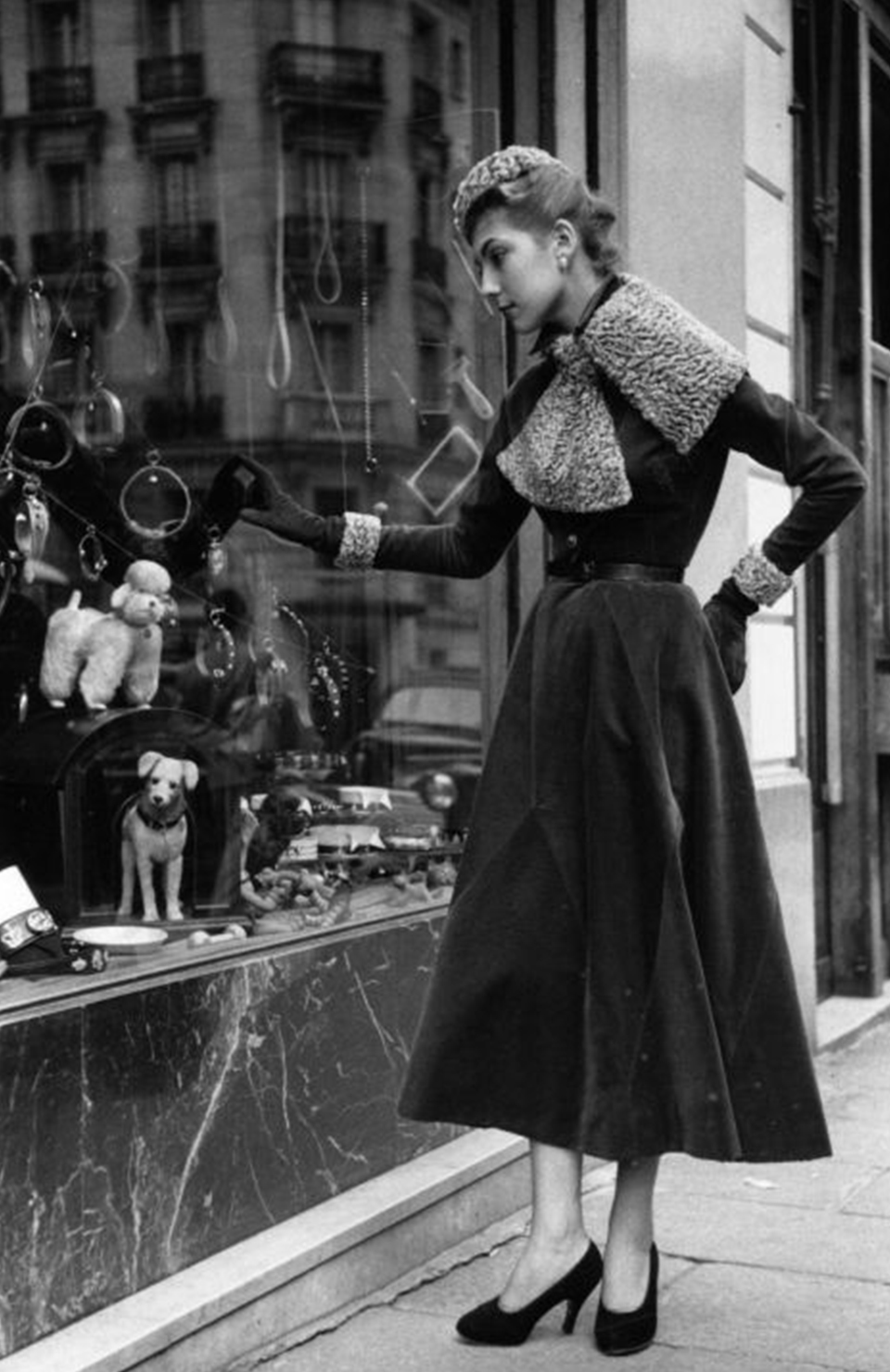
Photo: Elsa Schiaparelli
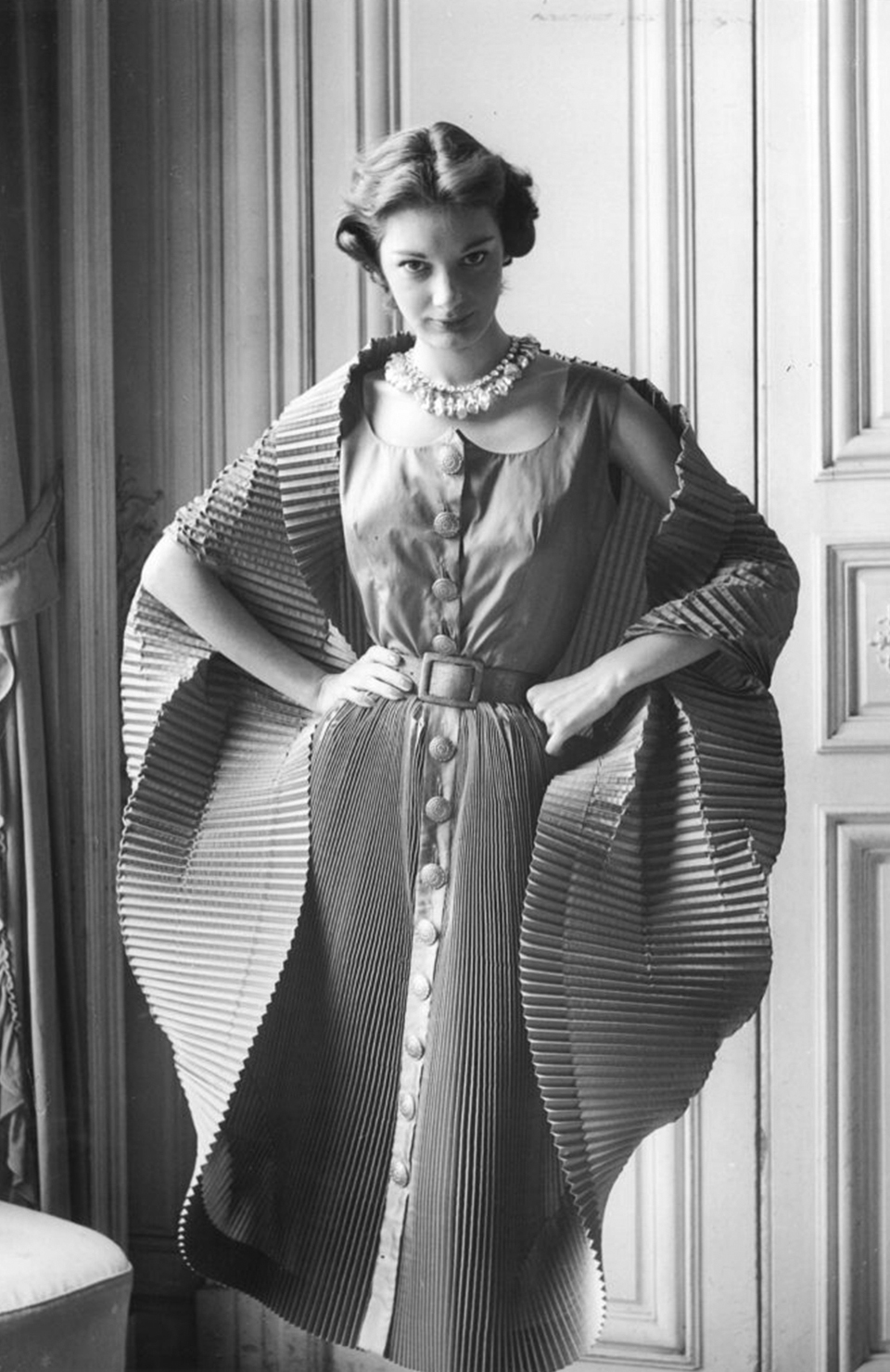
Photo: Elsa Schiaparelli
Her early years were somewhat marked by mischief. In 1911, she was sent to a Swiss convent school after publishing a poetry book that negatively characterised her family. Years later, she visited Paris for the first time en route to London, immediately sensing it would become her home. After the birth of her daughter, and becoming newly divorced at age 32, Schiaparelli moved to Paris and supported herself through various jobs, crediting both poverty and Paris for shaping her ambition.
These personal experiences laid the foundation for her unique creative perspective. In 1923, she was putting together simple but appealing pieces for friends while escorting affluent American clients through the couture houses of Paris. By 1925, she had secured a design role at a modest fashion label financed by a Mrs. Hartley, though the venture folded within a year. By 1927, she launched her own line, achieving early success with a trompe l’oeil bow sweater and establishing her brand in Paris.
Poverty forced me to work, and Paris gave me a liking for it and courage
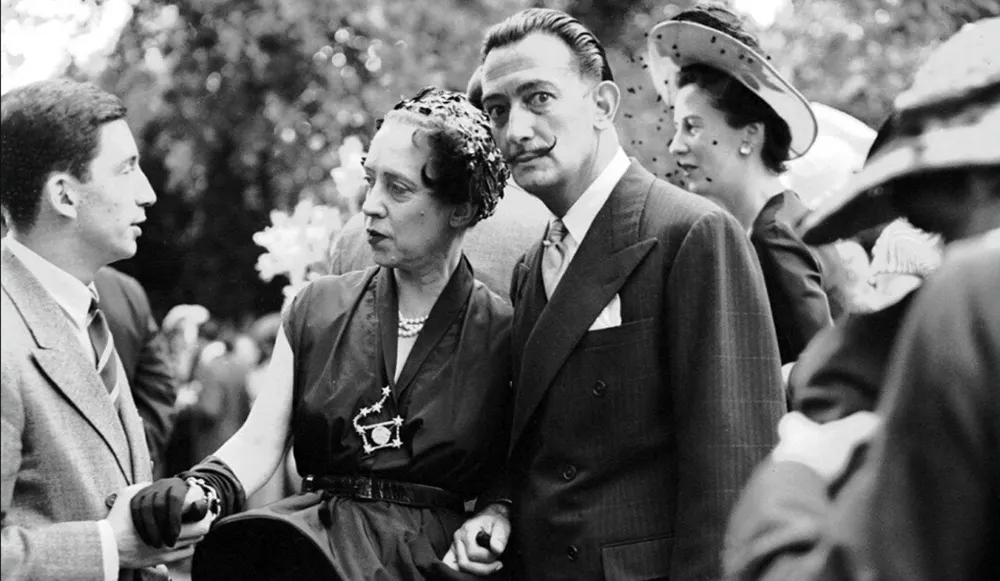
Photo: Elsa Schaiparelli and Salvador Dalì, 1936. Maison Schiaparelli.
With her vision established, Schiaparelli frequently collaborated with renowned Spanish artist Salvador Dalí throughout the 1930s and 1940s, as the pair shared a similar vision of Surrealism.
In her The Little Book of Schiaparelli (2012), author Emma Baxter-Wright explains:
“The partnership was rewarding for both artists, as Schiaparelli was known for her love of shock tactics and for her willingness to challenge the conventions of beauty and gender stereotypes.”
Schiaparelli and Dalí produced some of fashion’s most surreal accessories, including hats modeled after pork chops and inverted high-heeled shoes. Dalí’s unsettling imagery, notably his 1936 cover for Minotaure inspired a series of Schiaparelli designs that translated his dreamlike distortions into clothing.
Among the most scandalous design from the duo was the lobster dress, depicting a lobster over the pelvic area of a silk gown which was worn by Wallis Simpson, the American socialite betrothed to King Edward VIII.
Still, their most haunting collaboration arrived in 1938 with the “tear” dress, a silk trompe-l’œil gown that suggested shredded animal flesh.
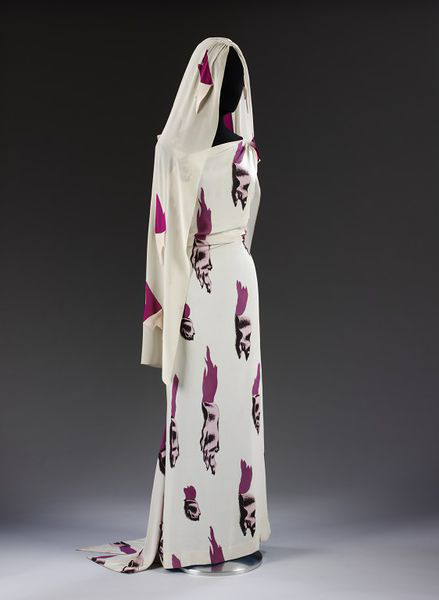
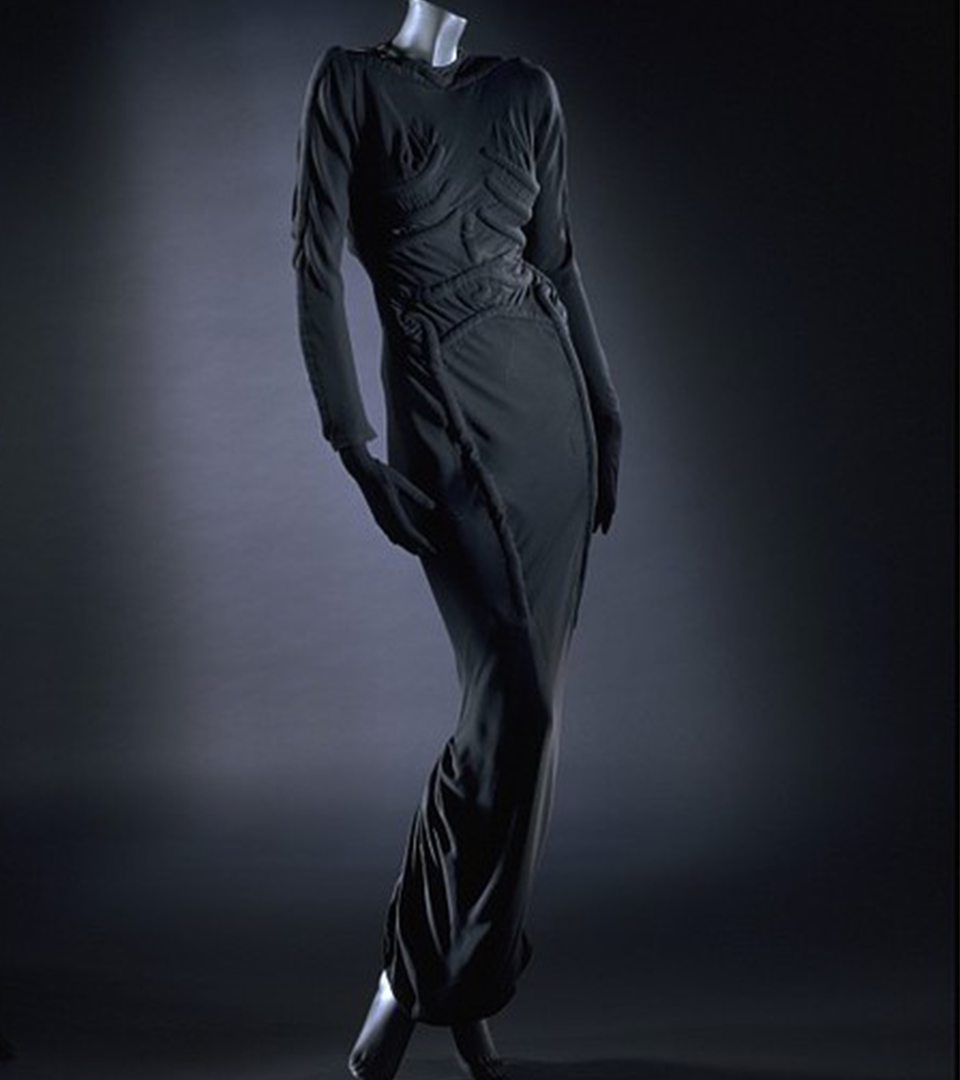
Over the years, Schiaparelli designs have continually questioned and expanded the meaning of the body. Today, in current collections, the body is reimagined as a sculpture and a relic. Daniel Roseberry, the house’s current creative director, clearly understands these codes. Building on Schiaparelli’s history, his Spring/Summer 2026 Haute Couture Presentation, “The Agony and the Ecstasy,” featured distorted botanical and sea motifs, along with unassuming visuals like a backwards skirt on a dress, giving Schiaparelli a renewed cultural impact.
Roseberry creations weren’t simply copying Elsa’s old tricks. They were channeling her way of thinking. The show generated significant interest by reviving her spirit of paradox. It made headlines and sparked discussions about what high fashion can represent today.
Among the latest recognitions is the Schiaparelli: Fashion Becomes Art exhibition at the Victoria and Albert Museum in London. This marks another milestone, positioning Elsa Schiaparelli as an artist in her own right. The show foregrounds her collaborations with Dalí and her role in collapsing disciplinary boundaries.
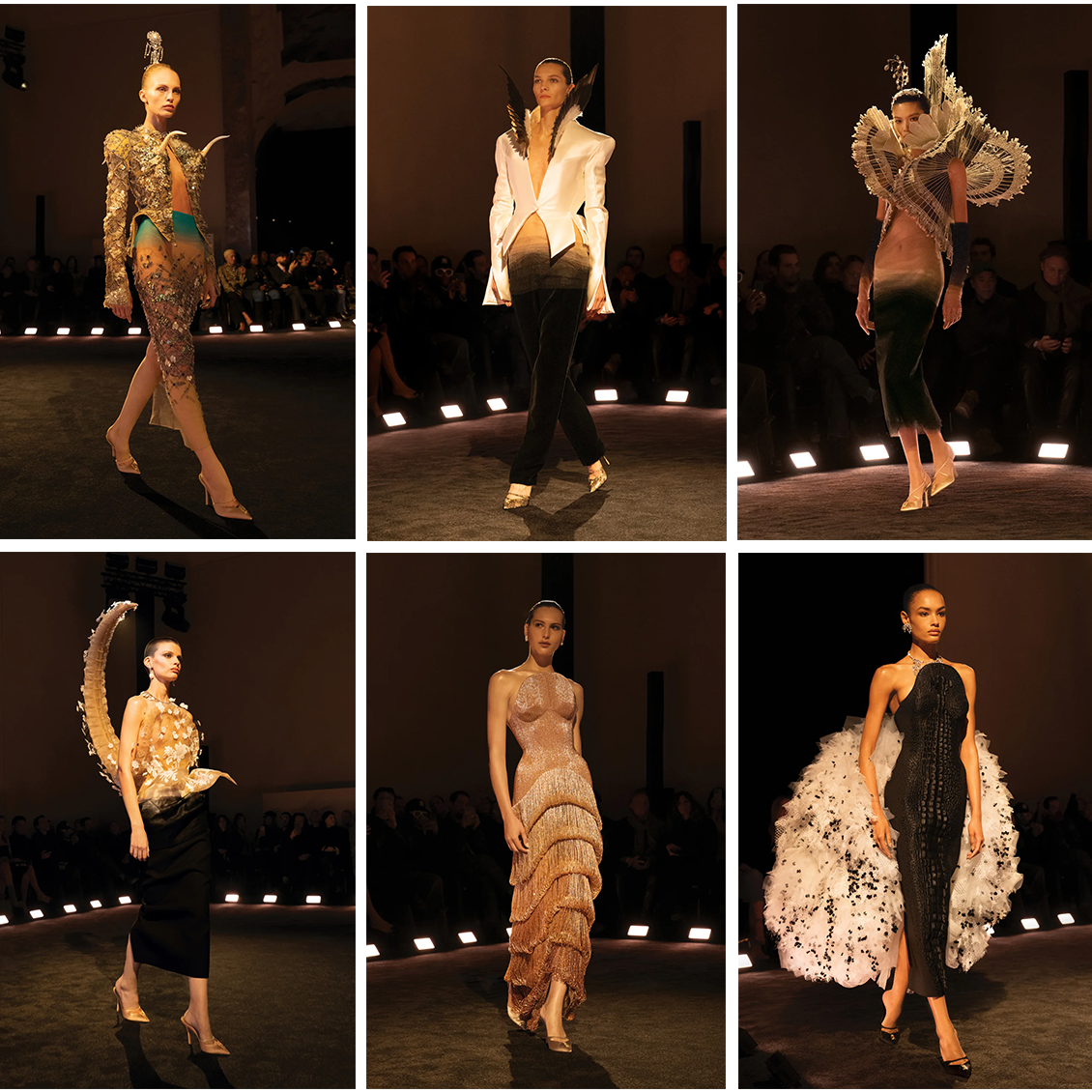
Throughout its history, Elsa Schiaparelli has produced pieces that inspire and astonish. Today, Daniel Roseberry carries this torch with contemporary signatures. His designs capture global attention through spectacular appearances on red carpets. From Lady Gaga’s golden dove brooch at the 2021 Presidential Inauguration to Kim Kardashian’s sculptural look at the 2023 Met Gala, and Zendaya’s show-stopping molded bustier gown during the 2026 press tour of her film The Drama.
These moments fuel Schiaparelli’s place at the epicenter of contemporary fashion conversation and demonstrate how the house’s story is continually being rewritten for each generation.
Join Our Inner Circle
Be the first to receive exclusive shopping guides, top stories and more.